Table of Contents
ToggleEvery monsoon season, construction sites in India face problems. These problems include water filling up the foundations, construction work stopping, equipment getting damaged and costs increasing a lot.
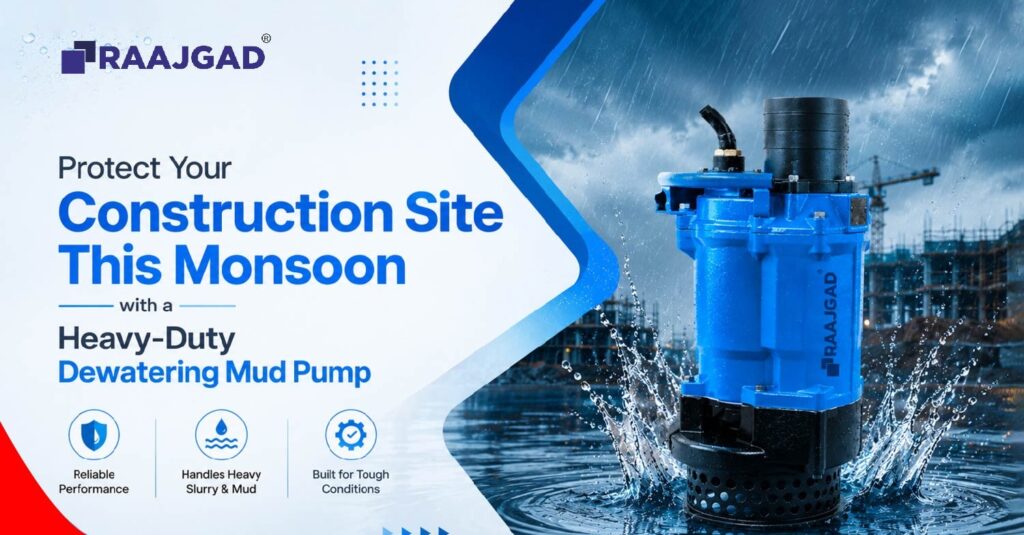
The main difference between projects that finish on time and those that get delayed is often one machine. This machine is a duty dewatering mud pump.
If you are in charge of a construction site and have not yet made a plan to manage water during the monsoon then this guide is, for you.
Why Monsoon Is the Biggest Threat to Construction Sites
Indias monsoon season brings a lot of rain around 700 to 1200 mm in three to four months. For construction sites those that involve digging, building foundations or making underground structures this means:
- Water fills up trenches and pits quickly
- Soil washes away. Slopes become unstable
- Concrete doesn’t set properly because its too wet
- Equipment gets. Workers are, in danger
- Projects get delayed, which means they take longer to finish and cost
Removing water by hand just doesn’t work when theres so much rain. That’s where a special pump, called a dewatering mud pump comes in handy. It helps to remove water from construction sites.
Key Benefits of Using a Heavy-Duty Dewatering Mud Pump on Your Site
1. Rapid Water Evacuation
These big pumps can move a lot of water thousands of litres every hour. They clear out areas like excavation pits and trenches really quickly. This means that work can start again without a delay.
2. Handles Mud and Debris Without Clogging
pumps stop working when they get muddy water. Mud pumps are made to handle this kind of water. They have openings that let solids pass through without getting stuck.
3. Protects Structural Integrity
When water gets into the foundations of a building it can make the soil weak and damage the concrete. If you remove the water efficiently you can keep the area dry and safe for construction.
4. Reduces Labour Costs
You do not need a lot of workers to remove water when you have pumps. These pumps do the work for you so your workers can do important tasks.
5. Minimises Project Delays
Every hour that a site is flooded is an hour of work. If you have a way to remove water you can stay on schedule. This means you will not have to pay money because the project is late.
6. Protects Equipment Investment
If you leave machines, electrical systems and tools in water they can get badly damaged. Removing water is also important, for protecting the things you own like your equipment.
How to Choose the Right Dewatering Mud Pump for Your Construction Site
Not all dewatering pumps are created equal. Here’s what to evaluate before you buy or rent:
Flow Rate and Head Capacity
Match the pump’s flow rate (litres per minute or cubic metres per hour) to the size of your site and expected water ingress. Larger excavation pits and high rainfall zones need higher-capacity pumps.
Solid Handling Size
Check the maximum particle size the pump can handle. For construction sites with coarse gravel and debris, look for pumps that handle solids of 25 mm or more in diameter.
Pump Material and Durability
Look for wear-resistant components — cast iron or chrome iron impellers and casings — that can withstand continuous abrasion from sand and grit.
Portability
Construction sites evolve. Choose a pump that can be moved easily across different areas of the site as dewatering needs shift.
Self-Priming Capability
A self-priming mud pump can restart after running dry, which is critical on sites where water levels fluctuate rapidly during and after rain.
Best Practices for Monsoon Dewatering on Construction Sites
Having the dewatering pump is only half the battle. To really get the most out of it you should follow these practices:
Plan Your Dewatering System Before the Monsoon Arrives
You need to set up sump pits at the lowest points of your excavation site. Then you put your dewatering pump intake in the sump pit so it can collect and remove water easily.
Use Filter Screens and Sedimentation Pits
Before you discharge the water that your dewatering pump has pumped out you should send it through sedimentation tanks or filter bags to get rid of any solids. This is important because it helps you follow rules and it stops your drainage systems from getting blocked.
Maintain Your Dewatering Pump Regularly
You should check the dewatering pumps impellers and seals and hoses a lot during the monsoon season. If your dewatering pump breaks down in the middle of a storm it can be very bad. So you should keep parts on site in case you need them.
Install Backup Pumping Capacity
For important projects you should always have a backup dewatering pump ready to go. If your main dewatering pump breaks, down you need to be able to keep removing water without stopping.
Monitor Water Levels All The Time
You can use float switches to turn on your dewatering pump when the water gets to a certain level. This way your dewatering pump can work all the time without someone having to watch it.
Industries and Applications That Need Dewatering Mud Pumps This Monsoon
- Building and infrastructure construction — basement excavations, pile foundations, underground parking
- Road and bridge construction — embankment work, culvert installation
- Mining and quarrying — pit dewatering, shaft sinking
- Tunnel construction — metro rail, highway tunnels, underpasses
- Industrial facilities — factory and warehouse foundations
- Municipal projects — sewage treatment plants, water supply infrastructure
Final Thoughts: Don’t Let the Monsoon Stall Your Progress
Monsoon season is here. That does not mean your construction site has to stop working. If you have a heavy-duty dewatering mud pump your site can keep going even when it is raining very heavily. You need to think about what you have to do before the monsoon season starts.
You have to pick the equipment for your site and make a complete plan to manage the water.
You cannot just use a pump you need a plan.
You have to protect your construction project, the people who work for you and the money you are spending this monsoon season. You can do this with a dewatering solution that is made for construction work, like yours.
Ulhas Yadav
Director & CEO of Raajgad Techno Services Pvt. Ltd. (RTSPL) With over 30 years of industry experience, he is passionate about delivering not just machines, but smart cleaning solutions that ensure efficiency, reliability, and long-term value. Under his leadership, Raajgad Pump has grown from a modest initiative into a trusted brand serving commercial, industrial, institutional, and hospitality clients across India. Ulhas Yadav believes that purpose, service, and innovation are the true drivers of success — and is committed to helping businesses maintain world-class hygiene standards in an ever-evolving environment. This blog reflects his vision to go beyond products — by sharing knowledge, updates, and guidance that empower customers to stay ahead with confidence.